A sewer backup is the worst kind of plumbing failure: waste water coming up through the lowest drain in the house. It almost never happens without a cause you could have seen, whether that is grease building up in the pipe, roots working into a joint, or old pipe slowly collapsing. Prevention is a mix of what you put down the drain, a few devices, and a periodic look inside the line. If you want the full picture of how we handle the main line, see our main line drain cleaning page.
What actually causes a sewer backup?
Backups happen when the main sewer line can no longer carry water out of the house, or when the public sewer fills and pushes water back. A sound pipe allows waste to flow away by gravity, so anything that interrupts the slope or the opening interrupts the flow. The causes are a clog from grease, wipes or paper, tree roots in the joints, a broken or sagging pipe, or a blockage in the city main.
Knowing which one you are most at risk of changes what you do. If your house has clay or cast iron pipe and mature trees, roots are the risk. If you live in a rental building with shared lines, wipes and grease are. If your lowest fixture sits below street level, the public sewer filling up is the risk, and a backwater valve belongs on the list.
What should you keep out of the drain?
The short answer is anything that does not dissolve like toilet paper. Grease, oil, coffee grounds, eggshells, "flushable" wipes, feminine products, paper towels, dental floss and cat litter all collect in the sewer line, most often at a rough joint or a low spot, and build a blockage over time.
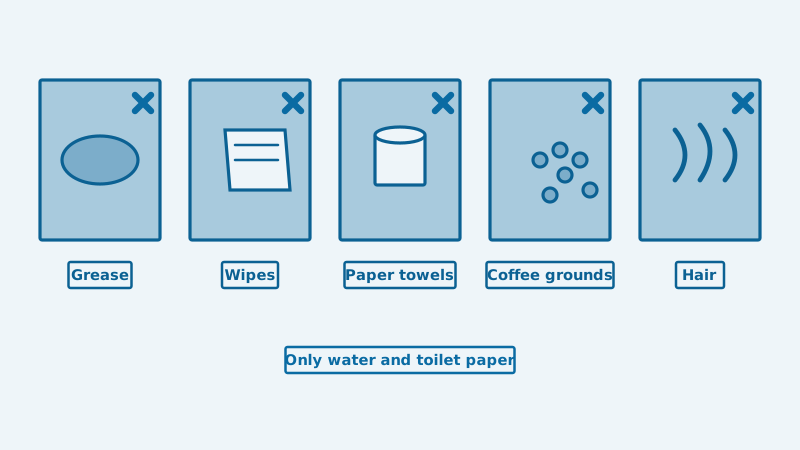
LA County Public Works asks owners to keep grease and food out of drains: scrape plates into the trash, use strainers for solids, and let grease cool before putting it in a sealed container in the trash. It is a boring habit that prevents more backups than any device.
A practical list for the house:
- Trash can by the toilet for everything except toilet paper.
- A strainer in every kitchen sink.
- A jar for cooking fat, not the drain.
- A hair catcher in each shower and tub.
- No wipes in the toilet, even those labeled flushable.
Does a backwater valve stop sewage coming back up?
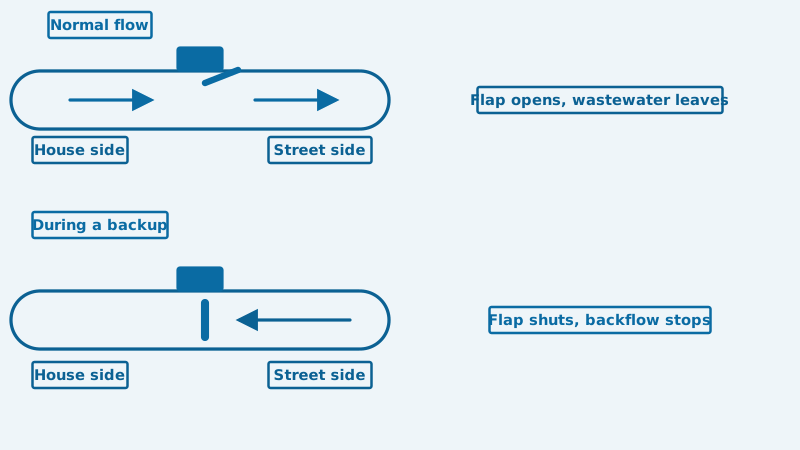
A backwater valve is a one-way flap installed in the sewer line that lets waste out but closes if water tries to flow back in. It helps when the public sewer surcharges. LA County notes that some properties need one because their lowest fixture drains below the upper manhole of the public sewer, and that the valve needs regular maintenance.
That last part matters. A valve that has never been opened and cleaned can jam, so a valve is not set and forget. A valve also does not help with a clog inside your own pipe, because water still has nowhere to go. It protects against backflow from the city side.
Ask a plumber whether your house needs one, and whether work on the line needs a permit, since sewer work in the City of Los Angeles runs through the Department of Building and Safety or, in the street, the Bureau of Engineering.
Do floor drain plugs and sewer backup prevention devices work?
They can, with limits. A floor drain plug or standpipe stops water rising through that single drain, but it does not stop a backup, it only moves the water to the next lowest opening, often a tub or toilet. A check valve on the line is the more complete device, and neither fixes a clog.
Think of plugs as a short-term measure when rain is forecast or when you know the main is blocked. Inflatable test plugs, rubber plugs and screw-in caps are available at hardware stores. Never leave one in place for daily use on a drain you need.
How often should the main sewer line be cleaned?
There is no fixed schedule that fits every house. Lines that have had roots or grease problems often benefit from cleaning every year or two, while a newer line with no history may only need a camera look every few years. The right interval is the one the camera tells you.
If you have had one backup, treat that as a sign the line needs a plan. A camera inspection shows how fast roots grow back, whether there are low spots that hold water, and what material the pipe is. The result gives you a schedule for your own line, not a generic one. Cleaning with a hydro jet removes buildup that a cable leaves behind, which can stretch the time between visits.
Why are older Los Angeles homes more at risk?
Many older homes still have their original pipe, and that pipe is often clay, cast iron or fiber. Roots enter clay at the joints, cast iron scales from the inside, and Orangeburg, a tar-and-fiber pipe that fell out of use in the early 1970s, softens and deforms over time.
You do not have to guess. A camera shows the material and its condition. If it is in good shape, regular cleaning is enough. If it is cracked or collapsing, cleaning only delays the problem and a repair is the better spend, covered in sewer line repair.
Also remember who owns what: in both the City and County of Los Angeles, the owner maintains the private lateral right out to the public main, including the stretch under the street. Roots under the parkway are still the owner's job to clear. Our tree roots page covers that side of prevention.
What should you do before a big storm?
Check that the cleanout cap is accessible and not buried, move anything valuable away from the lowest drain, and avoid running the washer during the worst of it. These steps will not stop a surcharge, but they limit the damage.
If you already see signs, such as gurgling or slow drains, treat them as a warning and schedule service online on our price request page before the weather turns. Adding sewer backup coverage is another form of prevention: many standard policies exclude it unless a rider is added, so read yours.
If your line has never been looked at, request a price and we'll arrange a camera visit. You can also go back to the LA Drain Works home page for the rest of our services.
Questions people ask
How do I know if my house is at risk of a sewer backup?
Warning signs include slow drains in several fixtures, gurgling toilets, a sewer smell, and a past backup. Old clay, cast iron or fiber pipe, large trees near the line, and fixtures below street level raise the risk. A camera inspection gives you a definite answer instead of a guess.
Will a sewer backup prevention device fit my house?
It depends on where your line runs and where the lowest fixture is. A plumber has to look at the line, the slope and the cleanout. Some houses can take a backwater valve easily, others need excavation. The visit should end with a written quote that explains what is installed and why.
Is sewer backup covered by insurance?
Often not by default. Many homeowner and renter policies exclude sewer or drain backup unless you add a rider, and limits and terms differ by company. Check your policy, ask your insurer what is covered, and keep records of any camera inspection, since they help if you ever claim.
Can I prevent a backup with chemical cleaners?
No. Chemical cleaners rarely reach or clear a main line, and they can damage old pipe. Prevention comes from keeping the wrong things out of the drain, controlling roots near the line, and cleaning the line mechanically whenever a camera shows buildup. Use chemicals sparingly, if at all.
What should I do if a backup is already happening?
Stop using water, keep people and pets away from the sewage, ventilate, and call a plumber. Do not run the washer or flush. Wear gloves if you must touch anything, and photograph the damage for insurance. Our guide to emergency sewer backup covers the next steps.
Sources used
- LA County Public Works, sewer lateral customer information
- LA Sanitation, managing and protecting LA's underground sewer system
- APWA Minnesota Chapter, The Rise and Fall of Orangeburg Pipe
- Published guides from Southern California drain cleaning and plumbing businesses, checked November 2026
Page updated