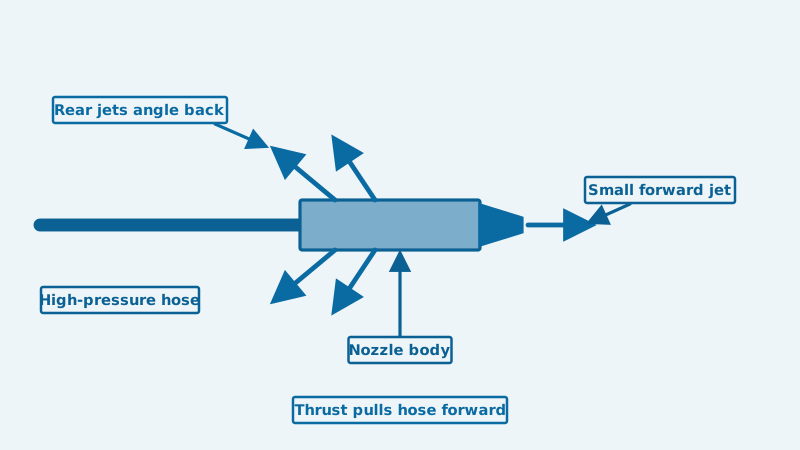
Hydro jetting works by pumping water through a hose to a nozzle that points jets backward and sideways. The backward jets pull the hose forward, and the water scours the pipe wall and flushes debris toward the sewer. Residential work commonly runs at about 1,500 to 4,000 psi. If you want the basics of the method, start at the hydro jetting drain cleaning page. The tips below cover how the job runs, what DIY kits can do and what to ask.
How does hydro jetting work inside the pipe?
The operator feeds the hose into a cleanout or an open drain until it reaches the blockage. The nozzle sprays water at the pipe wall, which cuts grease and scale and pulls the hose along. Back at the cleanout the operator works the hose back and forth to clean each section, then withdraws it while the water flushes the loosened material downstream.
Different nozzles do different jobs. A penetrating nozzle drives forward through a plug. A spinning or fan style nozzle cleans the wall. A chain or root cutter nozzle trims roots. A good operator starts at a lower pressure and works up, rather than running at the machine's maximum.
The water comes from a tank on the truck or a hose supply, and the pump is what builds the pressure. That equipment, and the training to use it, is what you are paying for. A camera run before and after shows what was removed and what remains.
Is it worth trying hydro jetting myself?
For a home drain, a consumer pressure washer drain kit can help with a light grease film in a short run. It runs at much lower flow than a professional unit, and it will not cut roots or push through a hard plug. For a main line, DIY jetting is rarely worth it, and it can do harm.
The risks are plain. High-pressure water can injure skin and eyes. A hose pushed against a plug can force sewage back into the house. A hose can kink and stall in a bend and need excavation to retrieve. And in a fragile pipe, even a modest pressure can widen a crack.
If you want to try, use the lowest setting, wear eye protection, stay out of the line of the nozzle, and stop if water comes back up. Our DIY drain cleaning guide covers what a homeowner can safely do with a plunger, a hand auger and a wet and dry vacuum.
What should I check before anyone jets my drain?
Ask for a camera look first. High pressure suits sound pipe and is a poor fit for pipe that has already failed. Los Angeles has a lot of older housing, and some homes built from the 1940s to the early 1970s have Orangeburg, a pipe made of wood pulp and tar. Wikipedia describes its useful life as about 50 years under good conditions, with failures reported much sooner.
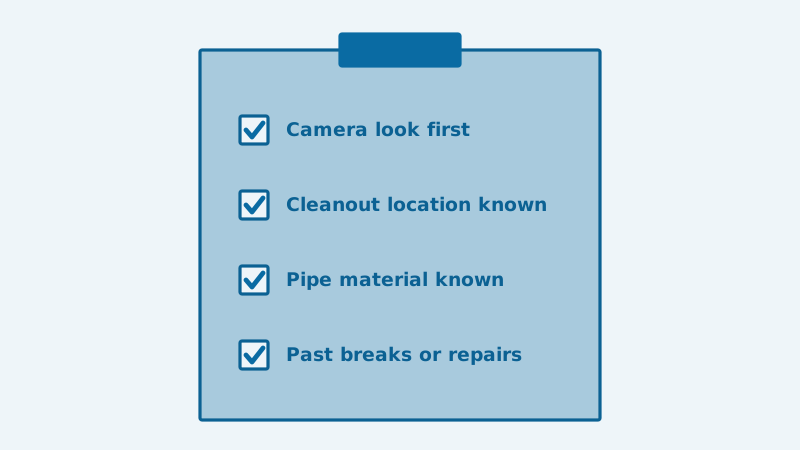
Other checks that keep a job safe:
- Pipe material. Cast iron, clay, ABS, PVC and Orangeburg tolerate different pressures.
- Pipe condition. Offsets, cracks and collapsed sections show up on camera.
- Cleanout access. A cleanout at the property line or house wall gives the safest route. Jetting through a toilet risks sewage on the bathroom floor.
- Where the water goes. Water must flow downstream. If the main is blocked beyond the cleanout, jetting first can send water back up into the house.
LA Sanitation runs a Sewer Lateral CCTV Rebate for camera inspections of private laterals, so check whether you qualify before you pay for the camera in full. Terms change, so read the current page.
What tips make hydro jetting last longer?
A single jetting clears buildup, but the buildup returns if you keep feeding it. Grease poured down a kitchen sink, wipes labeled flushable and tree roots reaching the joints are the main repeat causes. Fix those, then jet on a schedule that matches your risk, such as once a year for a root-prone lateral or a restaurant line.
Specific tips:
- Keep grease out of the sink. Wipe pans with a paper towel and put the towel in the trash.
- Treat wipes as trash, whatever the packaging says.
- If roots are the cause, jetting trims them but they regrow. A spot repair or lining deals with the entry point.
- Ask for a recording after the job so you can compare next year's picture to this one.
- Keep the cleanout accessible and know where it is.
If your problem is a slow single fixture, hydro jetting versus snaking will help you decide whether jetting is needed at all.
What does hydro jetting cost in Los Angeles?
National guides put hydro jetting at about $350 to $900 for a typical residential sewer line, with some guides citing higher averages and ranges up to $1,400 or more for long or root-heavy lines. West Coast jobs tend to cost more. A camera inspection adds roughly $125 to $750. The written quote after a visit is the price that counts.
What moves it: line length, how heavy the buildup is, access, whether roots need cutting and whether a camera is included. See hydro jetting cost for a longer breakdown, and hydro jet sewer cleaning for the main line version of the job.
Questions people ask
Can hydro jetting clear tree roots?
It can cut and flush roots from a pipe, using a root cutting nozzle. The roots usually grow back if the pipe still has a gap for them to enter. A spot repair, lining or regular maintenance is what keeps them out. Private line roots in Los Angeles are the owner's responsibility.
Is hydro jetting safe for old clay pipes?
It depends on their condition. Sound clay pipe tolerates a sensible pressure. Cracked, offset or collapsed clay does not, and water can wash soil out around the break. A camera look before jetting tells you which you have.
How often should a line be jetted?
There is no fixed interval. A line with roots or heavy grease may call for once a year. A clean modern line may never need it. Use the recording as your guide: if the wall is clean, wait.
Will hydro jetting fix a bellied pipe?
No. A belly is a low spot where water sits and solids settle. Jetting clears the debris, but the sag remains and the clogs return. The fix is a repair or replacement of that section. Our pipe lining versus replacement page covers the options.
Can I rent a hydro jetter?
Some rental yards offer sewer jetters. They are heavy, and the pressure and flow are easy to misjudge. If you rent one, ask for a lesson, use the lowest setting, and keep clear of the nozzle. Many people find a professional visit safer and cheaper than a mistake. Return to the LA Drain Works home page for other options.
Sources used
- HomeGuide, hydro jetting cost (2026)
- Wikipedia, Orangeburg pipe
- LA Sanitation, Sewer Lateral CCTV Rebate
- LA Sanitation, managing and protecting LA's underground sewer system
- Published 2026 price guides for hydro jetting, checked November 2026
Page updated