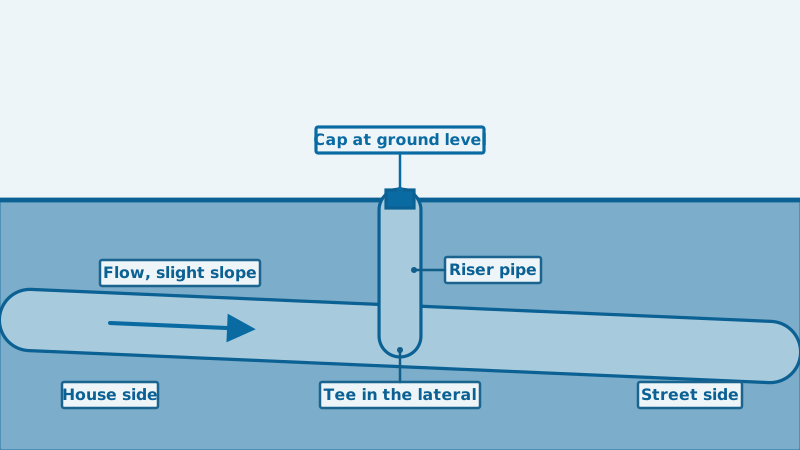
A sewer cleanout is a capped pipe, usually three or four inches wide, that rises from your main sewer line to ground level or sits just below it. Cleaning through it means unscrewing the cap and sending a cable or jet straight down the line. It is the fastest way into a clogged main, and part of any complete main line drain cleaning visit when a house has one.
Where is the sewer cleanout on my property?
Look for a round plastic or metal cap, often green, black or white, set in the ground or poking from the soil near the house. Common spots are along the side of the house, near a bathroom wall, in the front yard between house and street, or in a garage or utility room. It sits on the line that runs to the street.
Some tips for the hunt:
- Follow the toilet and tub drains. They share a line that leaves the house toward the street, and the cleanout is usually on it.
- Check beside the foundation where the lowest bathroom sits.
- Look under shrubs and ground cover. Cleanout caps get buried by landscaping.
- Flat caps with a square nut are common. Do not force a seized cap with a pipe wrench, because the fitting can crack.
If you cannot find one, a camera and locator can trace the line. We have no figure for how many Los Angeles houses have a cleanout, and older houses often do not.
Is it safe to open the sewer cleanout when the drains are backing up?
Not usually. If sewage is rising in a tub or floor drain, the main line is full, and opening the cap can release that wastewater out of the pipe and onto the ground around you. Water sits above the cap level in a full line, so it will come out. If you must look, loosen the cap slowly and be ready to retighten.
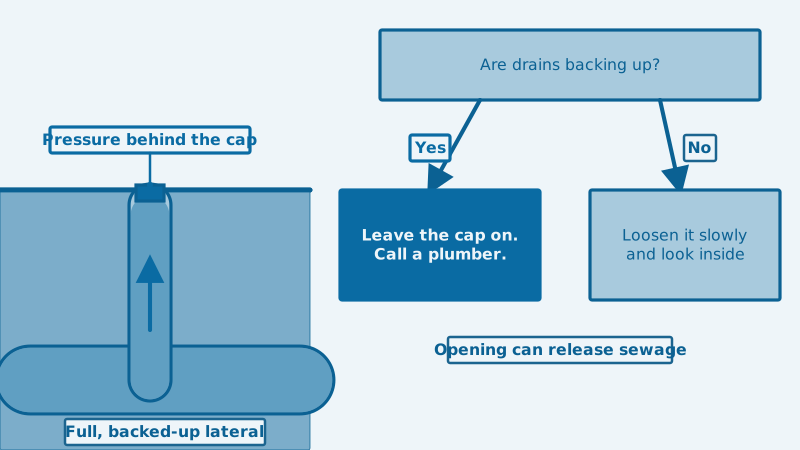
This is the main reason to leave a backed-up cleanout to a plumber. They arrive with a place to direct the flow, gloves, and a way to clean up. If the line is only slow, with no overflow anywhere, opening the cap to look is fine. Wear rubber gloves and eye protection, and keep children and pets away from the yard.
Do not pour chemical cleaner through an open cleanout either. If a cable has to follow, the person holding it gets splashed with whatever you added.
What does cleaning a sewer cleanout involve?
The plumber removes the cap, checks the pipe for standing water, feeds in a cable with the right head, and works toward the street until the clog breaks. Then they flush the line with water, often follow with a jet to scour the walls, and send a camera to see what caused the stoppage.
A few details matter:
- The cleanout should point the same way as the flow. A cable fed the wrong direction can miss the main entirely.
- If the cleanout is a single-way type, the plumber can only go downstream. A two-way fitting lets them go both ways.
- A cap that is cracked, or missing, is a path for sewer gas and also for roots, ants and surface water.
Our sewer cleaning guide explains how cable and jet differ. Cleaning through a cleanout is the cheapest version of main line work: published Los Angeles prices for cable clearing through an outdoor cleanout run about $150 to $500, against $250 and up when the plumber has to pull a toilet or work from a roof vent.
Should I add a sewer cleanout if my house does not have one?
If your house has none, installing one is usually worth it, mostly because it makes every future clearing quicker and cheaper. LA County Public Works recommends installing a backflow preventer and a cleanout on the sewer lateral as steps that help prevent backups. Do it when the line is already open for other work.
Published Los Angeles pricing for a new cleanout varies widely. A basic one-way fitting in soil starts around $500, while a two-way cleanout through concrete or at depth can reach $1,200 to $3,900. These are guides, and the plumber quotes the real price after seeing the line. Ask for the cleanout to be installed near the property line or where the main leaves the house, whichever puts the cable on a straight run.
In the City of Los Angeles, installing or changing sewer work can need a permit. Ask the plumber to handle that, and see our page on sewer line repair prices for the permit costs reported in published guides.
Can a cleanout be a source of sewer smell?
Yes. A cleanout with a loose, cracked or missing cap can leak sewer gas into the yard, and a shallow one beside a window can send it indoors. If you smell sewage outside near the cap, tighten or replace it first. Persistent indoor smell is more often a dry trap or vent problem, covered in our guide to sewer smell in the house.
Want a visit to clear the main and add a cleanout? Request a written price and we will arrange it. Our home page lists the rest of what we arrange.
Questions people ask
How often should a sewer cleanout be cleaned?
There is no fixed schedule for the cleanout itself. It only needs attention when the line behind it does. If you have tree roots or a history of clogs, a plumber may suggest a cleaning every year or two. A line with no history of trouble can go until a drain slows.
Who owns the sewer cleanout, me or the city?
If the cleanout is on your private lateral, it is yours, and so is the lateral. In the City of Los Angeles, LA Sanitation says the owner maintains the whole private lateral, including the part under the street. The city owns the main in the street and the wye that connects your lateral to it.
Can I use a drain snake from the hardware store through the cleanout?
A small hand snake can work for a slow line, but a main line is long and often has roots. Short store cables stop well before the street, and powered cables are risky for a first-time user. If a hand snake meets a hard stop, stop pushing and call a plumber.
How long does it take to clean through a cleanout?
A clean run through an accessible cleanout often takes one to two hours, including a camera pass. Heavy roots, a long lateral, or a collapsed section can stretch the visit. Ask your plumber for the time they expect when you book.
Sources used
- Los Angeles County Public Works, Sewer: cleanouts and backflow preventers
- LA Sanitation, Managing and Protecting LA's Underground Sewer System
- Published cleanout installation prices from Los Angeles plumbing businesses, checked November 2026
Page updated